

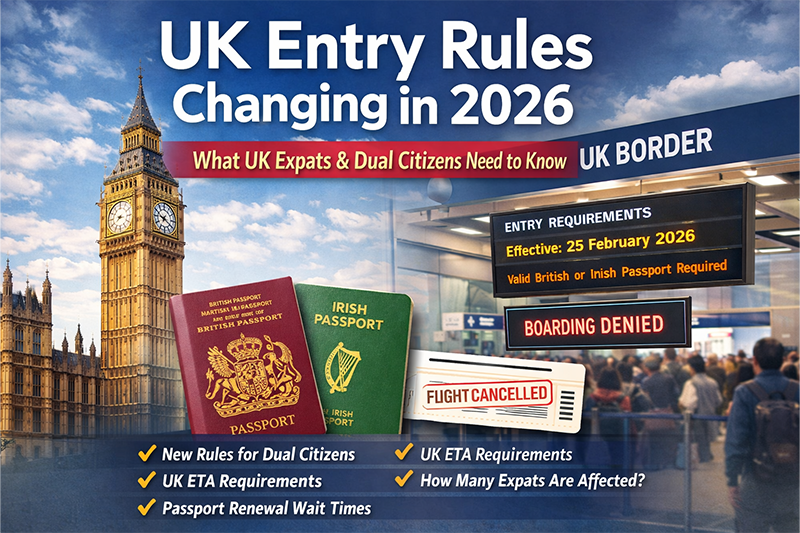
From 25 February 2026, the way UK expats and overseas travellers enter the UK is changing.
New border and passport rules mean some people who have travelled to the UK without issue for years could soon be refused boarding if they do not have the correct documents. This is particularly important for UK expats, dual citizens, and anyone applying for a UK passport from overseas.
This guide explains what is changing, when it starts, why the rules are being introduced, who could be affected, and what this means in real-world terms for holidays and permanent returns to Britain.
Quick Links:
- What Is Changing in 2026?
- When Do the New Rules Start?
- Who Brought These Rules In?
- Why Are the UK Entry Rules Changing?
- Who Could Be Affected?
- How Many Expats Could This Affect?
- Real-World Example: Holiday vs Returning to Live
- Current UK Passport Wait Times (Overseas)
- Do These Rules Apply to Expats in Ireland?
- What Should UK Expats Do Now?
What Is Changing in 2026?
From 2026, the UK is tightening how entry rights are checked before travel. The key change is this: your legal citizenship status will determine how you must enter the UK, not which passport you usually travel on. For many expats, especially those with dual nationality, travelling on the “wrong” passport could result in being refused boarding by airlines before departure.When Do the New Rules Start?
The new UK entry rules officially come into force on: 📅 25 February 2026 From this date, airlines and transport providers will be required to check travel authorisation and citizenship status before allowing passengers to board.Who Brought These Rules In?
The changes have been introduced by the UK Government through the Home Office, which is responsible for immigration, border security and nationality policy. It is important to note that British citizenship law itself has not changed. What has changed is how the UK verifies and enforces entry rights before travel.Why Are the UK Entry Rules Changing?
The UK is moving towards a fully digitised border system. The main reasons for the change include:- Improved border security
- Pre-travel identity checks rather than arrival-only checks
- Reducing errors and misuse of travel documents
- Aligning with systems already used by other countries
Who Could Be Affected?
You are most likely to be affected by the new rules if you:- Were born in the UK
- Hold British citizenship by descent
- Have dual nationality but travel on a non-UK passport
- Let your British passport expire years ago
- Assumed becoming a citizen of another country ended British citizenship
How Many Expats Could This Affect?
While there is no single official figure, the numbers involved are significant.- Close to one million UK-born people live in Australia alone
- Millions more UK citizens live in Canada, the USA, New Zealand and Europe
- Dual citizenship is common, especially among long-term expats
Real-World Example: Holiday vs Returning to Live
Scenario: James was born in England and moved overseas at 20. He became a citizen of another country, let his British passport expire, and has travelled on his non-UK passport for years. Under UK law, James is still a British citizen. Holiday visit: From 25 February 2026, James cannot apply for a UK ETA. If he tries to travel on his non-UK passport, he may be refused boarding unless he renews his British passport or holds a Certificate of Entitlement. Returning to live in Britain: James cannot enter as a visitor. He must enter as a British citizen, meaning he must renew his British passport before travelling.Current UK Passport Wait Times (Overseas)
At present, average overseas processing times are:- First Adult Passport (Overseas): 22 days
- Adult Renewal Passport (Overseas): 19 days
Do These Rules Apply to Expats in Ireland?
No — this is an important exception. The UK and Ireland operate under the Common Travel Area (CTA). British and Irish citizens can continue to travel freely between the two countries.- No ETA is required
- No new passport rule applies for routine UK–Ireland travel
- These changes apply to international travel into the UK, not CTA movement
What Should UK Expats Do Now?
If you are a UK expat, you should:- Confirm your citizenship status
- Check whether your British passport is valid
- Allow extra time for overseas renewals
- Plan travel well ahead of February 2026